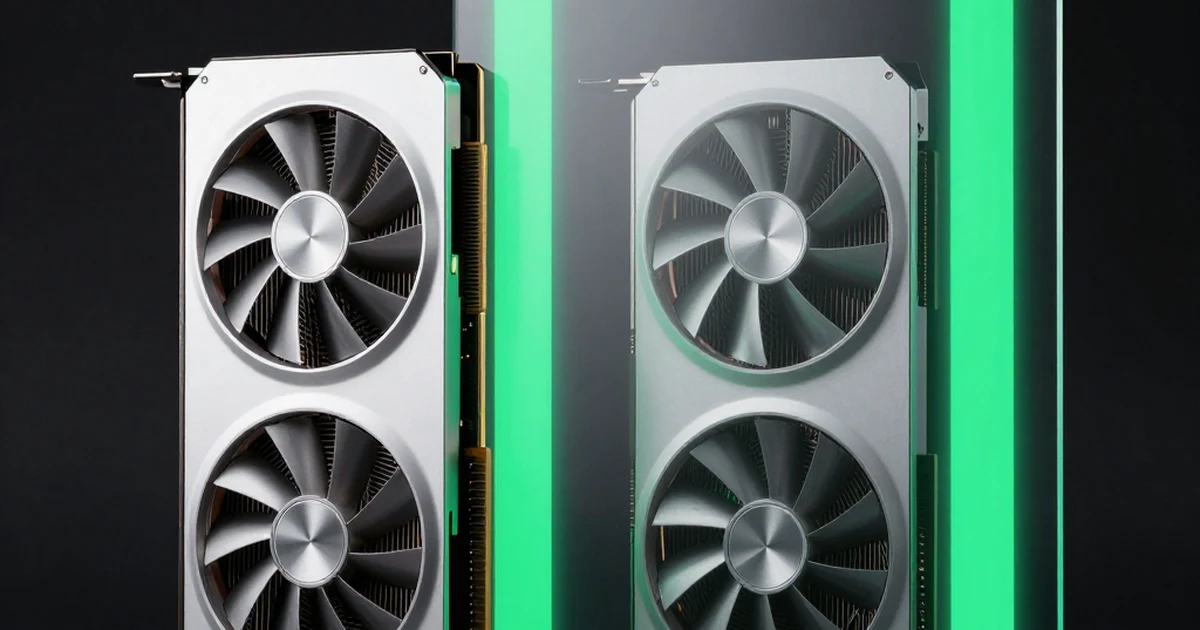


Every network that wants your graphics card publishes an earnings calculator. Almost none of them publish what they have actually paid. The calculator is the easy part — pick a utilisation rate, multiply, done. The ledger is the part that can embarrass you.
So here is ours, as of today.
| Paid to providers since January | 2,869.70 USDC |
| Providers who have earned something | 27 |
| Withdrawn to personal wallets | 1,114.41 USDC, across 12 payouts |
| GPU-hours rented | 9,440, across 424 rentals on 38 machines |
| Registered nodes / providers | 188 / 122 |
| Online while this was written | 17 — it moves by the hour |
Those numbers are small. We are publishing them anyway, because the alternative is a calculator, and you already know what a calculator is worth.
The split does not move
You keep 80% of the rental price. The platform keeps 20%. That is not a promotional rate or a tier you climb to — it is a constant in the billing service, and it is the same number for the first node you connect and the fiftieth.
Referral rewards come out of the platform's 20%, never yours. The full mechanics are in Rewards & Earnings and Credits & Billing.
Billing is per minute. You start earning in the first minute of a rental and keep accruing until the renter stops, which matters more than it sounds — a lot of sessions on this network are short.
What each card earns per hour
The renter pays the catalogue price for your GPU, or the price you set yourself. You receive 80% of it.
| GPU | VRAM | Renter pays | You keep |
|---|---|---|---|
| H100 PCIe | 80 GB | $1.80 | $1.44 |
| A100 80GB | 80 GB | $0.55 | $0.44 |
| RTX 5090 | 32 GB | $0.46 | $0.368 |
| RTX 4090 | 24 GB | $0.39 | $0.312 |
| RTX A6000 | 48 GB | $0.37 | $0.296 |
| RTX 5080 | 16 GB | $0.27 | $0.216 |
| RTX 3090 | 24 GB | $0.13 | $0.104 |
You are not stuck with the catalogue. You can set your own price per node, above or below it — the reasoning behind that, and when undercutting actually pays, is in Set Your Own GPU Rental Price. The mechanics are in Node Pricing.
The honest part: utilisation is lumpy
An hourly rate is only worth what it multiplies by, and this is where most provider pitches quietly stop talking.
Rental hours on this network by month:
| rentals | GPU-hours | billed | |
|---|---|---|---|
| May | 53 | 971 | $939 |
| June | 170 | 6,050 | $798 |
| July | 101 | 2,079 | $444 |
| August | 88 | 339 | $119 |
August was thin. Twelve machines saw a rental all month. If you connect a card today expecting it to pay your electricity bill from rentals alone, some months it will and some months it will not, and we would rather you knew that before you plugged it in than after.
Earnings are also concentrated: the top provider has earned 738 USDC, the top three account for well over half of everything paid out. Being online when demand arrives is most of the game, which is the actual argument for uptime.
The half that does not depend on renters
Rentals are one of two tracks, and the second one is the reason a high-VRAM card is worth connecting even in a quiet month.
Season 0 points accrue on uptime alone. No rental required. The formula is deliberately simple:
1 GB of VRAM = 1 point per minute.
| GPU | VRAM | points/min | points/day |
|---|---|---|---|
| RTX 3090 / 4090 | 24 GB | 24 | 34,560 |
| RTX 5090 | 32 GB | 32 | 46,080 |
| RTX A6000 | 48 GB | 48 | 69,120 |
| RTX PRO 6000 Blackwell | 96 GB | 96 | 138,240 |
| H200 | 141 GB | 141 | 203,040 |
Multiple GPUs stack. A machine with two 5090s earns 64 points a minute whether or not anybody rents it, for as long as it stays online and verified.
Season 0 is running now, it has no announced end date, and it rewards early providers — the standings are public on the Leaderboard, and the season's terms are in The ParalonCloud Incentivized Testnet.
The cards we actually need
This is the part of the article that is a request rather than a report.
Our fleet is mostly 24GB consumer cards, and 24GB has become the number that just barely does not work. We serve a 27B model at 4-bit on RTX 4090s: the weights alone are 18.7 GB, peak activation adds 1.76 GB, and what is left over on a 24GB card is under two gigabytes for everything else. That forces --enforce-eager, which switches off CUDA graphs, which costs throughput — and it leaves a KV cache small enough to hold barely more than one full-context request at a time. We wrote the whole measurement up in The Faster Card Was Half the Speed.
Every one of those compromises is a VRAM problem, and every one of them disappears on a bigger card.
An RTX 5090 (32 GB) turns that model from a tight squeeze into a comfortable fit — CUDA graphs on, a KV cache that can actually batch, and a card that is roughly twice the memory bandwidth of a 3090.
An RTX PRO 6000 Blackwell (96 GB) is a different category of machine on a network like this. It holds models that nothing else in our fleet can load at all, and it earns 96 points a minute doing nothing but staying online.
If you own either, you are the person this article is for. The same goes for A6000s, A100s, and anything with 48GB or more.
What we ask of your machine, and what we do not
We do not ask for an inbound port. Nothing on the internet ever connects towards your machine — the agent dials out and holds the connection open, which is why this works behind an ordinary home router with no configuration. The design is written up in A URL That Lives as Long as the Rental.
We do measure your card rather than take its word for it. Every node runs a verification container that benchmarks the GPU it claims to have, because a network that pays for hardware has to check the hardware exists — see How We Prove a GPU Is Real. This protects honest providers more than it inconveniences them.
The agent updates itself, in stages, with a rollback path, because we cannot ask 122 people to run a command every time we ship — the mechanism, including the parts that went wrong, is in A Field Guide to Updating a Network You Don't Own.
One piece of advice that will cost you nothing and earn you more: if your card is in a Windows machine, run the node on native Linux if you can. We measured two RTX 4090s that verify as near-identical hardware, one on WSL2 and one on native Linux. The WSL2 machine served inference 48% slower. Same container, same model, same arguments. That is throughput you are not paid for.
How to connect a card
Four pages, in order:
- Prerequisites — what your machine needs before you start.
- Hardware Requirements — the supported GPUs, driver versions and minimum specs.
- Add a Node — the actual install. It is a Docker container and a token.
- Node Pricing — set your rate, or leave the catalogue default.
Then Payouts for linking a Solana wallet and the withdrawal window, and Referrals if you know other people with idle cards.
The signup path for providers starts at Become a Provider, and you can see the live fleet — what is online, where it is, what it is running — on the Network page.
Why we published the small numbers
A network with 17 machines online can tell you it has 188 registered nodes and let you assume. We would rather be the network that shows you the thin months, because the providers we want are the ones who will still be here in a year, and those are not the providers you recruit with a calculator.
If you have a 5090, a 6000 Pro, or anything with more memory than the fleet currently has, we would genuinely like to hear from you — and we will keep publishing this ledger as it changes, including the months it goes the wrong way.